
L’ITALIANA IN LONDRA in Frankfurt

Livia: Angela Vallone
Madama Brillante: Bianca Tognocchi
Sumers: Theo Lebow
Milord Arespingh: Iurii Samoilov
Don Polidoro: Gordon Bintner
Statisterie der Oper Frankfurt
Frankfurter Opern- und Museumsorchester

Muziek : *4,5*
Regie: *4*

You can have any review automatically translated. Just click on the Translate button,
which you can find in the Google bar above this article.

The name Domenico Cimarosa, what does it mean these days? Sure, we know Il Matrimonio segreto, the only one of his 60 or 70 operas that is still performed. And we’re familiar, often unknowingly, with his oboe concerto. It has found its way into film, advertising and documentary music, and is among the many themes from classical music that have been chewed into a cud and regurgitated. There’s Dr. Oetker, who uses “La Donna è mobile” from Rigoletto to sell the virtues of its pizzas. Pampers feel most at home with Also sprach Zarathustra by R. Strauss, and McDonalds, in turn, likes to bond with Liszt, LiebestraumO lieb so zu lieben kannst” and the Mondscheinsonate.

But films and documentaries also like to use classical melodies. Out of Africa (1985) is supported by the adagio from Mozart’s Clarinet Concerto in A major, K. 622, and Death in Venice (1971), based on Thomas Mann’s novella Der Tod in Venedig, uses a generous helping of Mahler’s Third and Fifth Symphonies, especially the Adagietto from Mahler V, which is gradually being absorbed by the André Rieu universe.
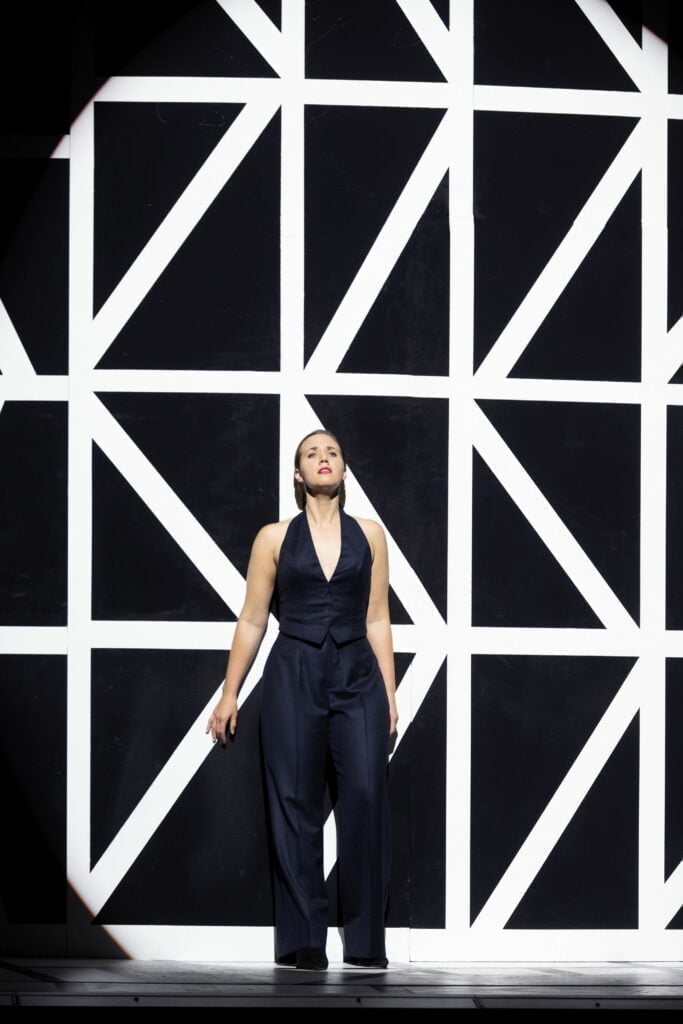
L'Italiana in Londra
Angela Vallone (Livia) ©Monika Rittershaus

Raging Bull was embellished with the Intermezzo from  Cavalleria Rusticana. This was a downright exquisite choice of music to accompany one of the most spectacular scenes in film history (besides The Chariot Race from Ben-Hur) : the helicopter attack in Apocalypse Now was cheered on by the “The Walkurenrit”. Should we ever find ourselves in the position of having to choose between Apocalypse Now and Debussy’s Pelléas et Mélisande for our evening out, there is no doubt: it will be Apocalypse Now! (And if we have to choose between Pelléas et Melisande and staying home it will be: staying home with a bottle of Very Old Gin.)

Cimarosa’s very fine oboe concerto  will probably also be familiar to you. It is played in the Iranian film Through the Olive Trees, by the Iranian film director Kiarostami, but mainly in documentaries with a sad or “the human being-central” theme: e.g. the demolition of a village church, the destruction of a city, the asylum seeker wandering around looking for a piece of humanity, the end of a family business whose oldest, 112-year-old member is delivering milk for the last time, the old and broken Louisiana Creole grandmother who lays flowers on the grave of her enslaved favorite great-great grandmother, etc. etc. Yes, that’s when the first movement of Cimarosa’s oboe concerto comes in handy!

Domenico Cimarosa (Aversa 1749-Venice 1801) was especially popular in his day for his comic operas. He received his first music lessons in a convent. After his conservatory training in Naples, Cimarosa found employment as an organist in the Neapolitan royal chapel. Naples was also where he premiered his first opera, Le stravaganze del conte (1772). He was particularly appreciated as an opera composer, and admired by Haydn and Goethe, among others. His music resembles that of Mozart, “yet doesn’t have…” (fill in as you see fit). Otherwise, consult the classical music connoisseur in your place of residence. After spending a period in Russia at the court of Catherine II (1787-1791), Cimarosa returned to the Kingdom of Naples.
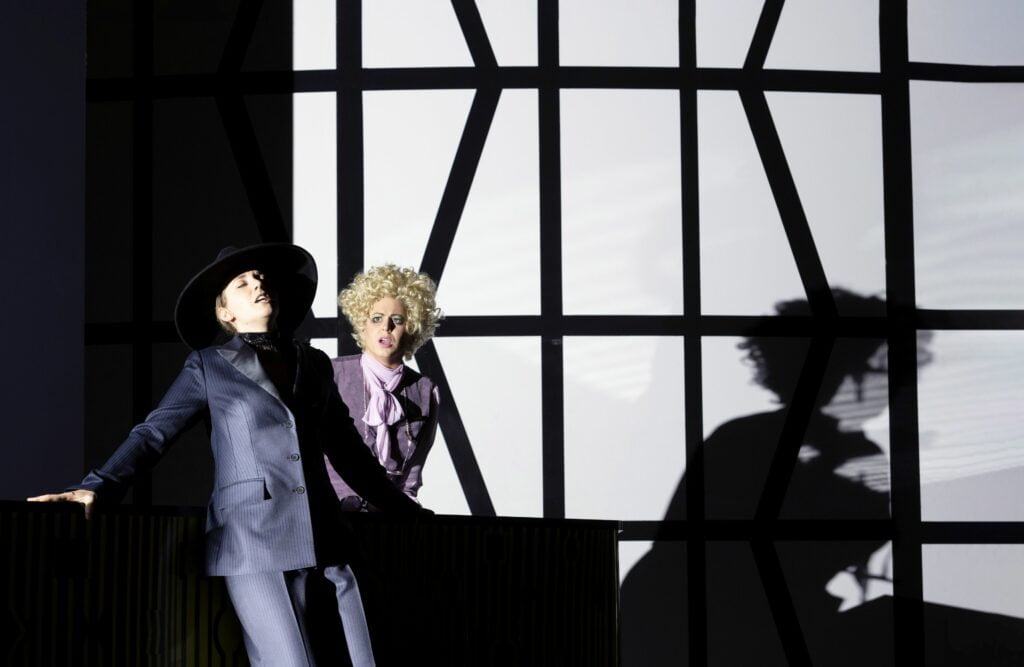
L'Italiana in Londra
v.l.n.r. Angela Vallone (Livia) und Bianca Tognocchi (Madama Brillante) ©Monika Rittershaus

In his heart, however, he was a republican, and when the French forces took Naples in 1799, he joined them anyway. However, when Ferdinand returned to power, Cimarosa ended up in prison. He was only just saved from the death penalty by the intervention of a few cardinals. He left Naples and died in Venice.

Although Domenico Cimarosa was one of the most frequently performed composers in all of Europe at the end of the 18th century – Joseph Haydn, for example, conducted thirteen of his operas in Esterházy between 1783 and 1790 – his works are almost completely absent from the operatic repertoire today.
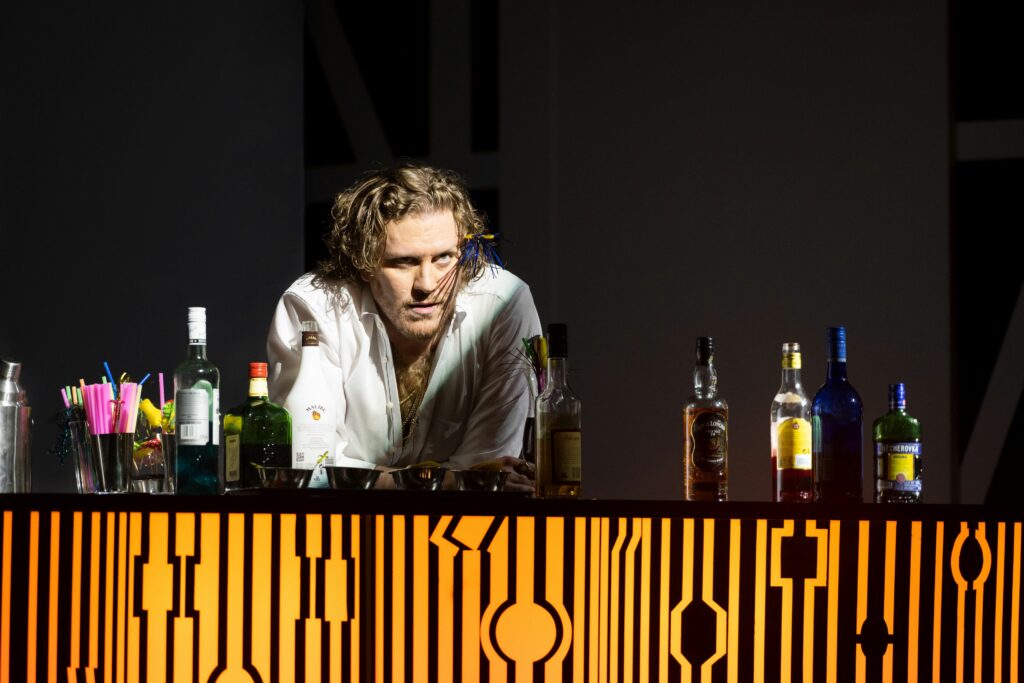
L'Italiana in Londra
Gordon Bintner (Don Polidoro) ©Monika Rittershaus

As said, he is in fact only known for his “dramma giocoso” Il matrimonio segreto, which is still performed. But his international breakthrough actually came several years before Il matrimonio, with L’italiana in Londra, an opera which music connoisseurs describe as strongly reminiscent of Rossini and Mozart. We were unable to detect Rossini, though we did detect Mozart, but without the hand of the master, especially in the arias. After its successful premiere in 1778 at the Teatro Valle in Rome, the work was soon performed all over Europe.

And now in Frankfurt they have decided to give Cimarosa’s L’italiana another chance. That’s certainly justified musically. But let’s not suddenly pretend that every undiscovered or seldomly played opera is an underexposed masterpiece. L’italiana in Londra is not a masterpiece

Madama Brillante, in times of war, runs a hotel in London. At one point, a dejected, a gruff English Lord (Arespingh), a clever Dutch merchant (Sumers) and a flamboyant Neapolitan (Don Polidoro) stay there. The Italian girl Livia arrives from Genoa but claims to be from Marseilles; she pretends to be Madama’s French waitress, “Henriette”. Arespingh faces the terrible prospect of having to marry a certain Diana, a bride chosen by his father, instead of his beloved Livia whom he had to leave behind in Genoa. Meanwhile, Madama Brillante has a crush on Don Polidoro, but Don Polidoro, in the best operatic tradition, falls for Livia. The action takes place in one day: there are quarrels,  entanglements with an invisibility stone, and other misunderstandings, but “at the end of the day” everything is resolved. It also becomes known that the war is over, and everyone celebrates peace.
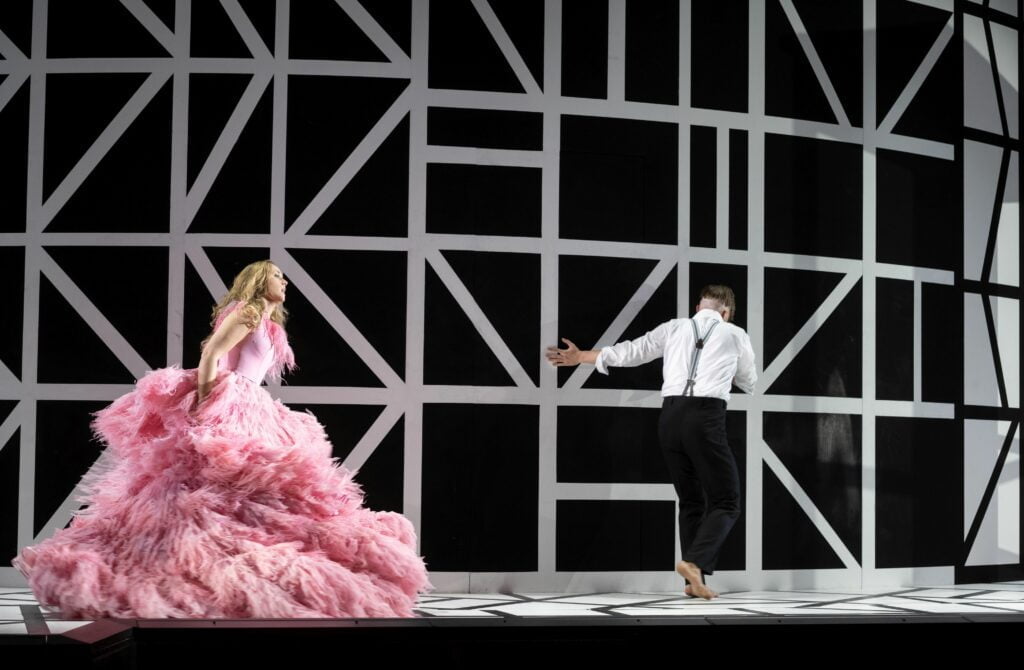
L'Italiana in Londra
Angela Vallone (Livia) en Iurii Samoilov (Milord Arespingh) ©Monika Rittershaus

The evening in Frankfurt began with an overture played with the curtain closed. That’s good for an hour of goodwill. Director R. B. Schlather kept up the momentum and almost turned it into a slapstick comedy, when perhaps a little less frenetic and uproarious direction would have been more appropriate. Dominus se ostendit in limitatione (‘it is in restraint that the master is revealed’ always applies, here too). The setting was decidedly dull: a hotel in a circular, revolving construction with alternating white and black areas. It is, of course, inconceivable that a comedy set in a hotel would also be set on stage in a recognizable hotel. The clichés this time: a cell phone, while a phone booth (?) also played an important role, sunglasses, a cigarette. On the other hand: the English lord had a bowler hat, the Italian was draped with gold chains and had a chest rich in vegetation. The Dutchman, of course, was a stiff rake. Madama Brillante was played by Bianca Tognocchi. She possesses a round, full and carrying soprano, and in the end, that’s all that matters. She vaguely reminded me of Kiri Te Kanawa. Vaguely. Angela Vallone took on the title role with excellent acting; a supple, agile coloratura soprano from the top shelf of the soprano closet. Iurii Samoilov (Milord Arespingh) has an energetic baritone with which he reinforces his amorous intentions, and Theo Lebow (Sumers), a great comic talent, portrays a bizarre Dutch merchant. Doesn’t matter whether it’s the colonies, the Football World Cup or the former Dutch property Belgium, the Dutchies are always left empty-handed. Gordon Bintner (Don Polidoro), a virile baritone and a great comedian, is the typical Italian macho who, because Italian, has it in for the females.

Leo Hussain had his Frankfurter Opera Orchester playing in a spirited and cheerful way. The freshness of Italian limes swept through the hall. In our opinion, with L’italiana in Londra, the Oper Frankfurt has brought a most charming production to the opera stage.

Olivier Keegel

Ceterum censeo theatrum insanientium delendum esse
5 1 vote
Article Rating
No Older Articles
No Newer Articles
Subscribe
Notify of
guest
1 Comment
Newest
Oldest Most Voted
Inline Feedbacks
View all comments
Herman Fluitman
4 years ago

Een prachtig artikel, Olivier, met doortimmerde achtergrondinformatie.

L’ITALIANA IN LONDRA in Frankfurt

Livia: Angela Vallone
Madama Brillante: Bianca Tognocchi
Sumers: Theo Lebow
Milord Arespingh: Iurii Samoilov
Don Polidoro: Gordon Bintner
Statisterie der Oper Frankfurt
Frankfurter Opern- und Museumsorchester

Muziek : *4,5*
Regie: *4*

You can have any review automatically translated. Just click on the Translate button,
which you can find in the Google bar above this article.

De naam Domenico Cimarosa, wat zégt deze ons nog? Akkoord, we kennen Il Matrimonio segreto, de enige van zijn 60 à 70 opera’s die repertoire heeft gehouden. En we kennen, vaak zonder het zelf te weten, zijn hoboconcert. Dat heeft zijn weg gevonden naar de film-, reclame- en documentairemuziek, en bevindt zich daar tussen allerlei tot brakens toe afgekloven thema’s uit de klassiek muziek. Wij noemen u Dr. Oetker die zijn pizza onder de aandacht brengt met “La donna è mobile” uit Rigoletto. Pampers voelen zich het best thuis bij Also sprach Zarathustra (!) van R. Strauss, en McDonalds verbindt zich beurtelings aan Liszt, Liebestraum ‘O lieb so zu lieben kannst’ en de Mondscheinsonate.
Maar ook films en documentaires bedienen zich met graagte van klassieke melodieën. Out of Africa (1985) wordt ondersteund door het adagio uit het Klarinetconcert in A majeur, KV 622 van Mozart, en Death in Venice (1971), gebaseerd op de novelle van Thomas Mann Der Tod in Venedig, behelpt zich met een flinke klodder uit de Derde en de Vijfde Symfonie van Mahler, vooral het zich zo langzamerhand naar het André Rieu-universum bewegende Adagietto uit Mahler V.

L'Italiana in Londra
Angela Vallone (Livia) ©Monika Rittershaus

Raging Bull werd verfraaid met het Intermezzo uit Cavalleria Rusticana. Ronduit voortreffelijk gekozen was de muziek die onder een van de spectaculairste scènes uit de filmgeschiedenis (naast The Chariot Race uit Ben-Hur) werd gezet: de helikopteraanval uit Apocalypse Now werd opgevrolijkt door de “De Walkurenrit” . Mochten wij ooit in de positie komen om voor ons avondje-uit te kiezen tussen Apocalypse Now en Debussy’s Pelléas et Mélisande, dan is er geen twijfel mogelijk: dat wordt Apocalypse Now! (En bij de keuze tussen Pelléas et Melisande en thuis blijven wordt het: thuisblijven met een fles Zeer Oude Genever.)
Cimarosa’s zeer fraaie hoboconcert   komt u vast ook bekend voor. Het wordt o.a. gespeeld bij de Iraanse film Through the Olive Trees (van de Iraanse filmregisseur Kiarostami), maar toch vooral bij documentaires met een  treurig of een de-mens-centraal thema: bijv. de sloop van een dorpskerk, de in Ter Apel rondslenterende asielzoeker op zoek naar een stukje menselijkheid, het einde van een familiebedrijf waarvan het oudste, 112-jarige lid voor de laatste keer de melk rondbrengt, de Surinaamse oma die een bloemetje legt op het graf van haar tot slaaf gemaakte favoriete betovergrootmoeder, etc. etc. Ja, dan komt het eerste deel van Cimarosa’s hoboconcert goed van pas!

Domenico Cimarosa (Aversa 1749-Venetië 1801) was in zijn tijd vooral populair door zijn komische opera’s. Zijn eerste muzieklessen kreeg hij in een klooster. Na zijn conservatoriumopleiding in Napels vond Cimarosa emplooi als organist in de Napolitaanse koninklijke kapel. In Napels ging ook zijn eerste opera in première: Le stravaganze del conte (1772). Hij werd bijzonder gewaardeerd als operacomponist, en bewonderd door o.a. Haydn en Goethe. Zijn muziek lijkt op die van Mozart, “maar heeft toch niet die…” (kunt u zelf invullen). Raadpleeg anders de klassiekemuziekkenner in uw woon- of verblijfplaats. Na een periode in Rusland aan het hof van Catherina II (1787-91) te hebben doorgebracht keerde Cimarosa  terug naar het koninkrijk Napels.

L'Italiana in Londra
v.l.n.r. Angela Vallone (Livia) und Bianca Tognocchi (Madama Brillante) ©Monika Rittershaus

In zijn hart was hij echter republikein, en toen de Franse strijdmachten in 1799 Napels innamen, sloot hij zich toch bij hen aan. Echter, toen Ferdinand weer aan de macht kwam, belandde Cimarosa in de gevangenis. Hij werd door de tussenkomst van een paar kardinalen maar net van de doodstraf gered. Hij verliet Napels en stierf in Venetië.
Hoewel Domenico Cimarosa aan het eind van de 18e eeuw een van de meest uitgevoerde componisten in heel Europa was – Joseph Haydn bijvoorbeeld dirigeerde tussen 1783 en 1790 dertien van zijn opera’s in Esterházy – staan zijn werken tegenwoordig bijna niet meer op het operarepertoire.

L'Italiana in Londra
Gordon Bintner (Don Polidoro) ©Monika Rittershaus

Hij is eigenlijk alleen bekend om zijn “dramma giocoso” Il matrimonio segreto, dat nog repertoire gehouden heeft.  Maar zijn internationale doorbraak kwam eigenlijk  al enkele jaren vóór Il matrimonio, met L’italiana in Londra, een opera waarvan de kenners zeggen dat de muziek sterk aan Rossini en Mozart doet denken. Rossini hebben wij niet kunnen ontdekken, Mozart wel, maar dan zonder de compositoire meesterhand, vooral in de aria’s. Na de succesvolle première in 1778 in het Teatro Valle in Rome, werd het werk al snel overal in Europa opgevoerd.

En nu heeft men in Frankfurt besloten Cimarosa’s L’italiana een nieuwe kans te geven. Zeker muzikaal gezien, terecht. Maar laten we nu niet net doen of elke onontdekte of weinig gespeelde opera meteen een onderbelicht meesterwerk is. L’italiana in Londra is geen meesterwerk, meer een lesser Mozart.

Madama Brillante runt, in tijden van oorlog, in Londen een hotel. Op een gegeven moment verblijven er een neerslachtige, norse Engelse Lord (Arespingh), een slimme Nederlandse koopman (Sumers) en een flamboyante Napolitaan (Don Polidoro). Het Italiaanse meisje Livia arriveert uit Genua, maar beweert uit Marseille te komen; zij doet zich voor als Madama’s Franse serveerster, ‘Henriette’. Arespingh ziet zich geconfronteerd met het vreselijke vooruitzicht dat hij moet trouwen met een zekere Diana, een bruid die door zijn vader is uitgekozen, in plaats van met zijn geliefde Livia die hij in Genua heeft moeten achterlaten. Ondertussen heeft Madama Brillante een oogje op Don Polidoro, maar Don Polidoro valt in de beste operatraditie voor Livia. De actie voltrekt zich in  één dag: er zijn ruzies en misverstanden, maar “aan het eind van de dag” is alles opgelost. Het wordt tevens bekend dat de oorlog voorbij is, en iedereen viert de vrede.

L'Italiana in Londra
Angela Vallone (Livia) en Iurii Samoilov (Milord Arespingh) ©Monika Rittershaus

De avond in Frankfurt begon met een ouverture gespeeld met gesloten doek. Dat is goed voor een uur welwillendheid. Regisseur R. B. Schlather houdt de vaart erin en maakte er bijna een slapstick-komedie van, terwijl een wat minder hectische en hilarische regie wellicht beter op zijn plaats was geweest. Dominus se ostendit in limitatione (in de beperking toont zich de meester gaat altijd, dus ook hier op). Het decor was uitgesproken saai: een hotel in een cirkelvormige, revolverende ruimte met afwisselend witte en zwarte vlakken. Het is anno 2021 natuurlijk ondenkbaar dat een komedie die zich in een hotel afspeelt, zich  ook op het toneel in een herkenbaar hotel afspeelt. Aan clichématige attributen geen gebrek: de mobiele telefoon, (terwijl ook een telefooncel (?) een belangrijke rol speelde), de zonnebril, de sigaret.  Verder: de Engelse lord heeft een bolhoed (want Engelsman), de Italiaan is behangen met gouden kettingen (want Italiaan) en voorzien van een borst rijk aan vegetatie. De Hollander is natuurlijk een stijve hark en een idioot (want Hollander). Madama Brillante, de hotelhoudster, wordt gespeeld door Bianca Tognocchi. Zij beschikt over een ronde, volle en dragende  sopraan, een prachtstem, en daar gaat het tenslotte maar om. Zij deed mij in de verre verte aan Kiri Te Kanawa denken.  Angela Vallone neemt uitstekend acterend de titelrol op zich; een soepele, beweeglijke coloratuursopraan van heb ik jou daar. Iurii Samoilov (Milord Arespingh) beschikt over een energieke bariton waarmee hij zijn amoureuze intenties kracht bijzet, en Theo Lebow (Sumers), een groot komisch talent, zet een bizarre Nederlandse koopman neer. Of het nu om Indië, de WK voetbal of België gaat, de Nederlanders blijven altijd met lege handen achter. Gordon Bintner (Don Polidoro), een viriele bariton en een geweldige komiek, is de typische spaghetti-vretende Italiaanse macho (maar geen dirigent) die, want Italiaan, het olijkjes op de vrouwtjes voorzien heeft.

Dirigent Leo Hussain liet zijn Frankfurter Opera Orchester pittig en opgewekt spelen. De frisheid van limoenen zweemde door de zaal. Wij menen: de Oper Frankfurt heeft met L’italiana in Londra een alleraardigste productie op het operatoneel gebracht.

Olivier Keegel

Ceterum censeo theatrum insanientium delendum esse
5 2 votes
Article Rating
Olivier Keegel

Editor-in-Chief

Chief Editor. Does not need much more than Verdi, Bellini and Donizetti. Wishes to resuscitate Tito Schipa and Fritz Wunderlich. Certified unmasker of directors' humbug.

No Older Articles
No Newer Articles
Subscribe
Notify of
guest
2 Comments
Newest
Oldest Most Voted
Inline Feedbacks
View all comments
A. Minis
A. Minis
4 years ago

Als men een pakkend wijsje nodig heeft, grijpt men maar wat graag naar de ”elitaire, truttige” klassieke muziek. Prachtige lijst, heer Keegel! ook weer een geestige recensie.

Ad Middendorp
Ad Middendorp
4 years ago

Een uitgebreide en zeer leerzame terugblik dit keer. Ik denk dat de terugkerende reismogelijkheden hier positief aan bijgedragen hebben. Ja het is me wat hè met
die Hollanders , terwijl het enige tijd geleden nog meestal de inboorlingen waren die
met lege handen achterbleven, waar hun voorvaderen aan wal kwamen.